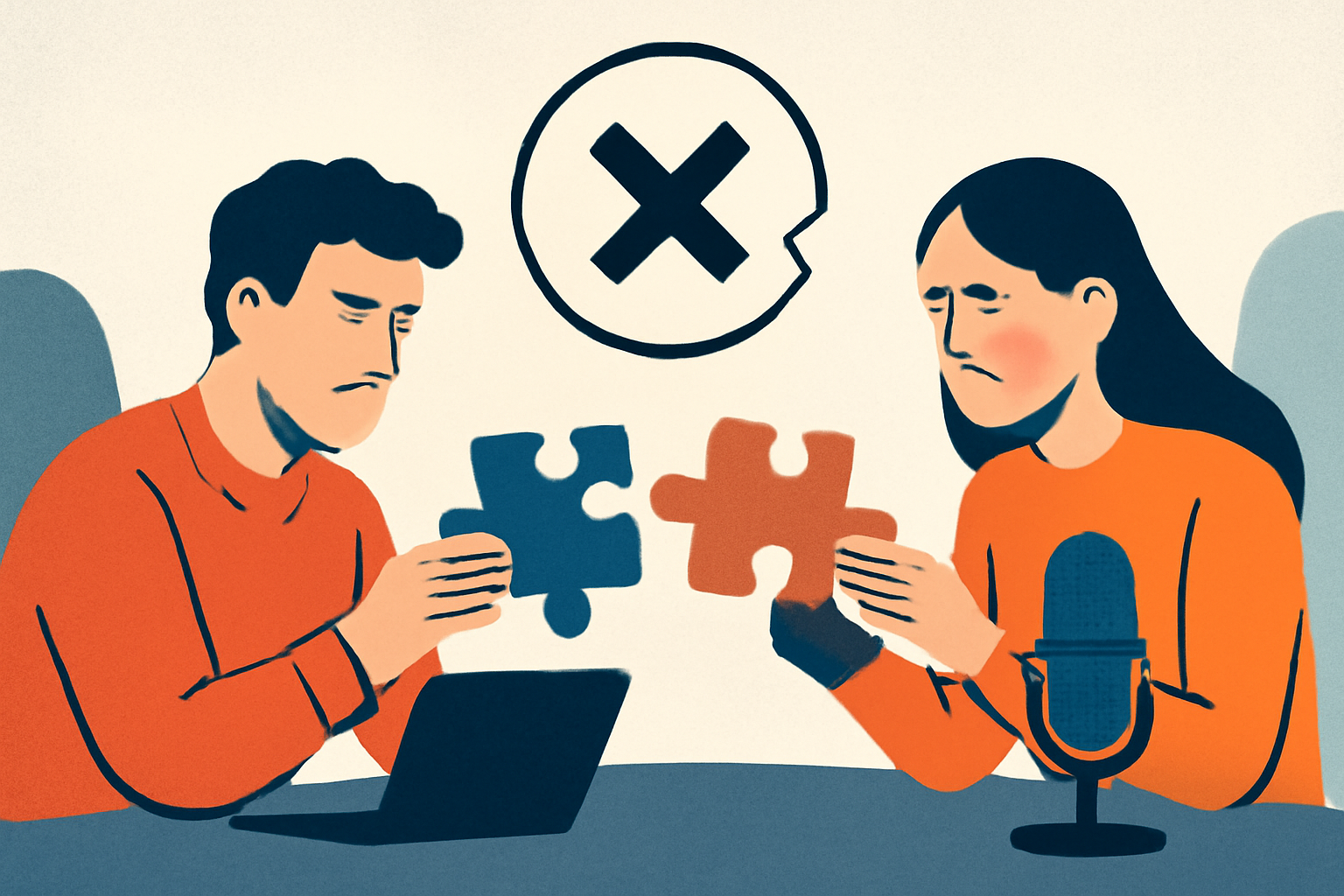


I watched a brand pay a lot of money for a creator collaboration that looked perfect on paper and produced almost nothing. The creator was big — hundreds of thousands of followers, polished content, a real audience that engaged. The brand was excited; this felt like a shortcut to visibility they'd been chasing for months. The post went up, got the creator's usual healthy engagement, a wave of likes and comments, and then... nothing happened for the brand. No meaningful traffic, no sign-ups, no lift they could detect. The collaboration had, by the only measure that mattered, failed — and everyone involved was surprised, because by the measures they'd been watching, it looked like a success.
That gap — between a collaboration that looks successful and one that actually works — is where most creator partnerships live and die, and almost nobody talks about it honestly. The appeal of a creator collaboration is obvious and seductive: someone has spent years building an audience that trusts them, and for a fee, they'll point that audience at you. It feels like renting access to trust, which is the hardest thing in marketing to build. So brands chase big creators, creators sell their reach, and a whole economy runs on the assumption that a large audience plus a paid post equals results.
The problem is that this assumption is wrong most of the time, and it's wrong for reasons that are structural, not accidental. The typical creator collaboration is optimized for the wrong things and built in the wrong shape, and no amount of budget fixes a structure that's designed to fail. A big audience that isn't your audience produces nothing. A creator with no stake in your outcome produces an ad they don't believe in. A one-off post can't build the trust that actually drives someone to act. These aren't bad-luck outcomes; they're the predictable result of how most collaborations are set up.
I'm not writing this to say creator collaborations don't work, because the good ones work extremely well — better than almost anything else. I'm writing it because the difference between the collaborations that work and the ones that waste everyone's money is knowable, and most people get it wrong in the same few ways. Here's why most creator collaborations fail, and what the model that actually works looks like instead.
Key Takeaways
- Follower count is not audience fit. A huge audience that isn't your audience produces nothing. The only followers that matter are the overlap between the creator's audience and your actual market.
- Misaligned incentives doom most deals. A creator paid for a one-off post has little stake in your results, so you get an ad they don't believe in — and audiences can tell.
- One-off posts can't build trust. The trust that actually drives action comes from repetition and genuine integration, not a single sponsored mention that scrolls by once.
- Reach is a vanity metric here too. Measuring likes and views instead of real outcomes is how failed collaborations get mistaken for successful ones.
- The model that works is a relationship, not an ad buy. Genuine audience fit, aligned incentives, ongoing partnership, and creative freedom beat a big name and a big check every time.
Why Creator Collaborations Look Like Obvious Wins
It's worth understanding the appeal, because the appeal is real and it's exactly what leads people astray. Building an audience that trusts you is slow, expensive, and uncertain. A creator has already done it. So a collaboration feels like a shortcut — you skip the years of audience-building and borrow someone else's trust for a fee. When you frame it that way, paying a big creator looks like one of the smartest moves available: instant access to a large, engaged, trusting audience.
The logic then runs naturally toward size. If you're renting access to an audience, a bigger audience seems like more of what you're buying, so brands gravitate toward creators with the largest follower counts they can afford, and creators price themselves on those counts. Follower count becomes the currency of the whole transaction — the number everyone negotiates around, the thing that makes a creator "worth" a certain fee. It's clean, it's measurable, and it's almost entirely the wrong thing to optimize for.
Because the shortcut logic contains a hidden, fatal assumption: that the creator's audience is your audience, and that their trust transfers to you. Neither is reliably true, and when they're not true, the whole thing collapses — you've rented access to the wrong people, and the trust you were counting on doesn't come along for the ride. The appeal is built on treating a creator's audience as a fungible pool of attention you can buy a slice of, when it's actually a specific group of specific people who trust that specific creator about specific things. Miss the fit, and the size means nothing.
Why Most of Them Fail
The failures cluster into a few structural causes, and once you see them, the surprise isn't that collaborations fail — it's that anyone expected the typical setup to work.
The first is the fit problem. A large audience that doesn't overlap with your actual market is worthless to you, no matter how impressive the number. A creator with a million followers who care about one thing will do nothing for a brand in an unrelated category, because reach without relevance is just noise. The only followers that matter are the overlap between the creator's audience and the people who might actually want what you offer, and that overlap can be tiny even when the total is enormous. Chasing follower count instead of audience fit is the single most common way collaborations fail.
The second is misaligned incentives. In a typical one-off paid deal, the creator is paid to post regardless of whether it works for you, which means they have essentially no stake in your outcome. Their real incentive is to protect their own brand and keep their audience happy, not to drive results for you — and often those goals quietly conflict, because pushing your product too hard costs them credibility with their audience. So you get a careful, hedged, low-conviction mention: an ad the creator doesn't really believe in and has no reason to make work. And audiences are extraordinarily good at detecting a promo the creator doesn't mean, which brings us to the third problem.
The third is authenticity, or its absence. The entire value of a creator is that their audience trusts them, and that trust is fragile. A forced, obviously-paid, off-brand promotion doesn't transfer the creator's trust to you — it spends the creator's trust and gives you nothing, because the audience recognizes it as a transaction and discounts it accordingly. When the fit is wrong or the creator doesn't believe in the product, the inauthenticity is palpable, and both parties lose: the brand gets no results and the creator erodes the very trust they were selling.
And the fourth is the one-off structure. Trust that drives action is built through repetition and genuine integration, not a single sponsored mention that appears once and scrolls away. A person seeing a creator use and rave about something repeatedly, over time, in a way that clearly reflects real use, might act on it. The same person seeing one obviously-paid post almost never does. Yet most collaborations are structured as exactly that single transactional post, which is the format least capable of producing the trust the whole thing depends on.
Underneath all four is a measurement failure that hides the others: reach. Because collaborations are so often judged by views, likes, and impressions rather than actual outcomes, a failed collaboration looks successful. The post "reached" a lot of people and got a lot of likes, so it must have worked — except reach and likes predict very little about whether anything real happened, and treating them as success is how brands keep repeating collaborations that don't work. [BACKLINK PLACEHOLDER → suggestion: internal link to article #19, most marketing data is theater / vanity metrics] The vanity metrics don't just fail to measure success; they actively disguise failure as success.
The Model That Actually Works
The good collaborations invert almost every one of these failures, and the pattern is consistent enough to describe as a model.
They start with genuine audience fit over follower count. The right creator isn't the biggest one you can afford — it's the one whose audience genuinely overlaps with your market and trusts them about something relevant to what you do. A smaller creator with a tightly-matched, engaged audience will consistently outperform a huge creator whose audience has nothing to do with you, because every one of those smaller creator's followers is a real potential customer rather than a number. Fit is the whole game, and fit has almost nothing to do with size.
They align incentives so the creator has a real stake in your outcome. Instead of a flat fee for a post they don't care about, the structures that work give the creator a reason to want it to succeed — longer-term partnerships, affiliate or revenue-share arrangements, genuine belief in the product, sometimes equity. When the creator wins only if you win, you get their real effort and conviction instead of a hedged, obligatory mention. The best collaborations often start with creators who already genuinely like the product, because belief can't be bought but it can be found.
They're built as ongoing relationships, not one-off transactions. A creator who integrates a brand into their content repeatedly, over time, in a way that reflects real use, builds the kind of trust that actually moves their audience — because it stops reading as an ad and starts reading as a genuine part of the creator's life. The single sponsored post is the weakest possible version; the ongoing, integrated relationship is the strongest.
And they give the creator creative freedom. The brand's instinct is to control the message — approved talking points, mandatory phrases, tight scripts — and that control is exactly what kills the authenticity the collaboration depends on. The creator knows their audience infinitely better than the brand does, and the thing that made them worth partnering with is their voice. Over-controlling that voice produces a stiff, obviously-corporate promo that the audience tunes out. Letting the creator make it in their own way, on their own terms, is what makes it land — the same reason over-controlling a creative brief suffocates the work it's meant to guide. [BACKLINK PLACEHOLDER → suggestion: internal link to article #3, the over-briefing / creative brief problem] Trust the person you chose specifically for their judgment.
None of this is new, exactly — it's just the recognition that a creator's value is a relationship, not a media slot, and that relationships work when they're structured as relationships. This is the same shift the whole creator economy is going through, from creators-as-ad-inventory to creators as genuine partners and businesses in their own right. [BACKLINK PLACEHOLDER → suggestion: internal link to article #17, the creator economy and the agency are becoming the same thing]
🎬 Embed a short breakdown contrasting a failed one-off creator post with a successful ongoing, well-fit partnership, and why the second drives real results.